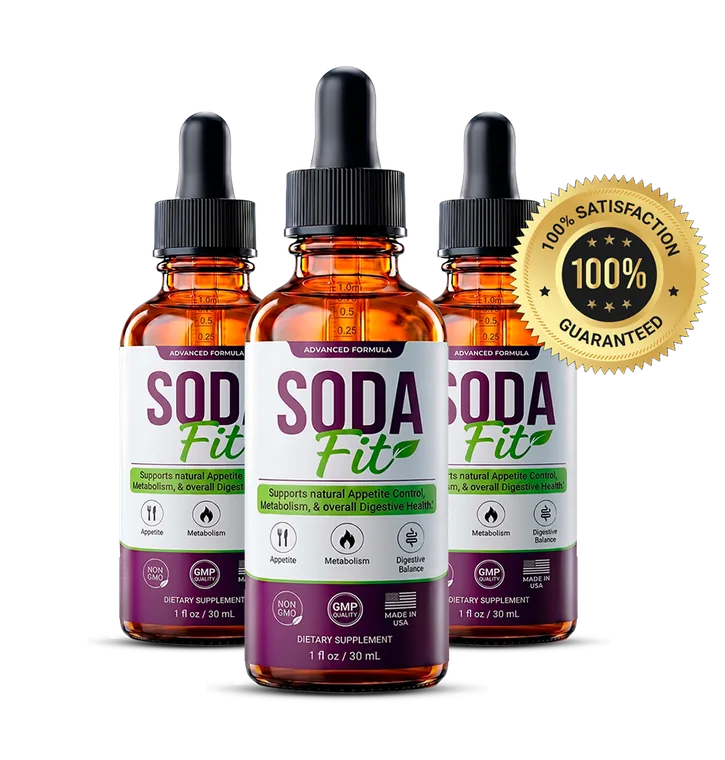
SodaFit® Ingredients & Blend Information
One line on this panel has a number. The other twenty-one share a single total. Here is the full list, what each one is, and what the research used.
The one line with a number on it
Chromium (as chromium picolinate) — 7 mcg, 20% of the daily value. An essential trace mineral with a documented role in normal macronutrient metabolism. Seven micrograms against a 35 mcg daily value is exactly 20%, so the panel's own arithmetic checks out — a small thing, but the kind of small thing that tells you someone was paying attention.
It is also, on a restricted diet, one of the minerals most easily under-consumed. Of the twenty-two actives on this label, chromium is the only one you can compare against a reference intake, and the manufacturer chose to show it to you.
The twenty-one that share 15.47 mg
Printed in the order the panel lists them, which by law is descending by weight. Extract ratios are the manufacturer's own.
| # | Ingredient | Ratio | Type |
|---|---|---|---|
| 1 | Maca Lepidium meyenii root extract | 20:1 | Botanical |
| 2 | African Mango Irvingia gabonensis seed extract | 10:1 | Botanical |
| 3 | Grape Seed Vitis vinifera seed extract | 20:1 | Botanical |
| 4 | Guarana Paullinia cupana seed extract | 20:1 | Botanical |
| 5 | Eleuthero Eleutherococcus senticosus root extract | 20:1 | Botanical |
| 6 | Astragalus Astragalus membranaceus root extract | 20:1 | Botanical |
| 7 | Green Tea Green tea leaf extract | 20:1 | Botanical |
| 8 | Gymnema Gymnema sylvestre leaf extract | 20:1 | Botanical |
| 9 | Forskohlii Coleus forskohlii root extract | 20:1 | Botanical |
| 10 | Cayenne Pepper Capsicum annuum fruit extract | 20:1 | Botanical |
| 11 | Grapefruit Seed Citrus paradisi seed | — | Botanical |
| 12 | Panax Ginseng Panax ginseng root extract | — | Botanical |
| 13 | Raspberry Ketones | — | Other compound |
| 14 | L-Glutamine | — | Amino acid |
| 15 | L-Tyrosine | — | Amino acid |
| 16 | L-Arginine | — | Amino acid |
| 17 | Beta Alanine | — | Amino acid |
| 18 | Monoammonium Glycyrrhizinate from liquorice root | — | Other compound |
| 19 | GABA gamma-aminobutyric acid | — | Other compound |
| 20 | L-Tryptophan | — | Amino acid |
| 21 | L-Carnitine HCl | — | Amino acid |
Other ingredients: water, natural flavors, potassium sorbate, stevia, xylitol, citrus extract.
The division, once more, because it is the whole point. 15.47 mg ÷ 21 = roughly 737 micrograms each. Descending order means the first names are larger and the last smaller, so the real split is uneven — but nothing on the label tells you by how much. If Maca took half the blend on its own, the remaining twenty would average 368 mcg. If it took nine tenths, they would average 74 mcg. Every one of those scenarios is consistent with this panel, and that is exactly what a proprietary blend is for.
Green Tea Leaf Extract
The most-studied ingredient on this roster and the one most often used to justify a metabolism claim. Catechins, EGCG chief among them, plus naturally occurring caffeine.
Gymnema Sylvestre Leaf Extract
The classic appetite ingredient. Gymnemic acids temporarily blunt sweet taste on the tongue, which is a real and pleasingly demonstrable effect.
Forskohlii Root Extract
Coleus forskohlii, standardised in the research to forskolin. It is the ingredient with the most specific mechanism story in the blend.
African Mango Seed Extract
Irvingia gabonensis, marked on this panel as a 10:1 concentrate — the one ingredient given a different ratio from the rest.
Being fair to the label
It would be easy to write this page as a hatchet job, and it would be wrong. Four things about this panel are better than the category average, and they are worth stating as plainly as the criticism:
- Every ingredient is named, with species and plant part. Twenty-two names is a lot of disclosure next to a blend called “Metabolic Matrix”.
- Extract ratios are published — 20:1 on most, 10:1 on the African mango. Most labels skip this entirely.
- Chromium is broken out properly, with an amount and a correct %DV.
- The other-ingredients list is short and unremarkable: water, natural flavours, potassium sorbate, stevia, xylitol, citrus extract. Zero calories, no artificial sweetener declared.
And the counter-argument the manufacturer would make — that a 20:1 concentrate is twenty times stronger than the raw herb, so small numbers go further — is a real argument that deserves to be run rather than waved away. We ran it, in a piece of its own. The short version: it helps, and it does not close a gap of this size, because the studies were mostly run on extracts too.
These statements have not been evaluated by the Food and Drug Administration. This product is not intended to diagnose, treat, cure or prevent any disease. The doses referenced above come from published human studies of single ingredients. None of them tested SodaFit.